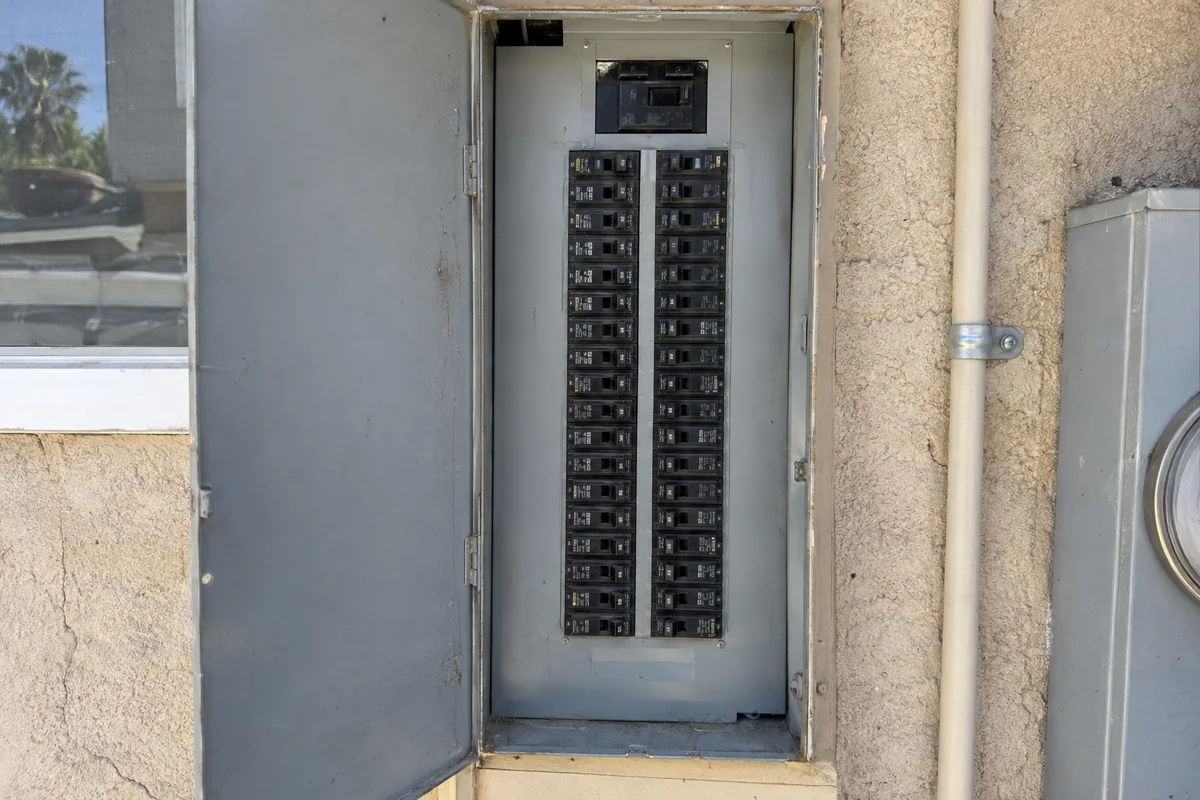
Panel already at capacity
No open breaker spaces means a subpanel or a bigger service, and that is better known early.

We read the panel and the sewer line at the site visit, and the price is written down before work starts.
Everyone budgets for the walls. On ADU power, water and sewer connections in Los Angeles, CA, the surprise sits behind them: a main panel with no open breaker spaces, a sewer line nobody has looked at since the house was built, or a water meter at the far end of the lot. Housing here is old. The Census puts the median Los Angeles home at 1965, and 69.9 percent of units were built before 1980.
A second home adds a kitchen, a bath, laundry and heating or cooling to that old service. The answer to what the service can carry decides where the unit can sit, so we read the panel label, find the sewer cleanout and locate the water meter before the drawings are final.
Sometimes the answer is small. A panel with open spaces and a short run to an existing cleanout lands near the low end of the range below, and a long trench across a finished patio lands near the other end. Usually the sewer decides which.
Utility calls reach us from Glendale, Burbank and Long Beach, where the utility or the city office that answers is different from the one in Los Angeles.
These six change the connection plan the moment someone sees them. Any one is worth a call before the drawings are final.
No open breaker spaces means a subpanel or a bigger service, and that is better known early.
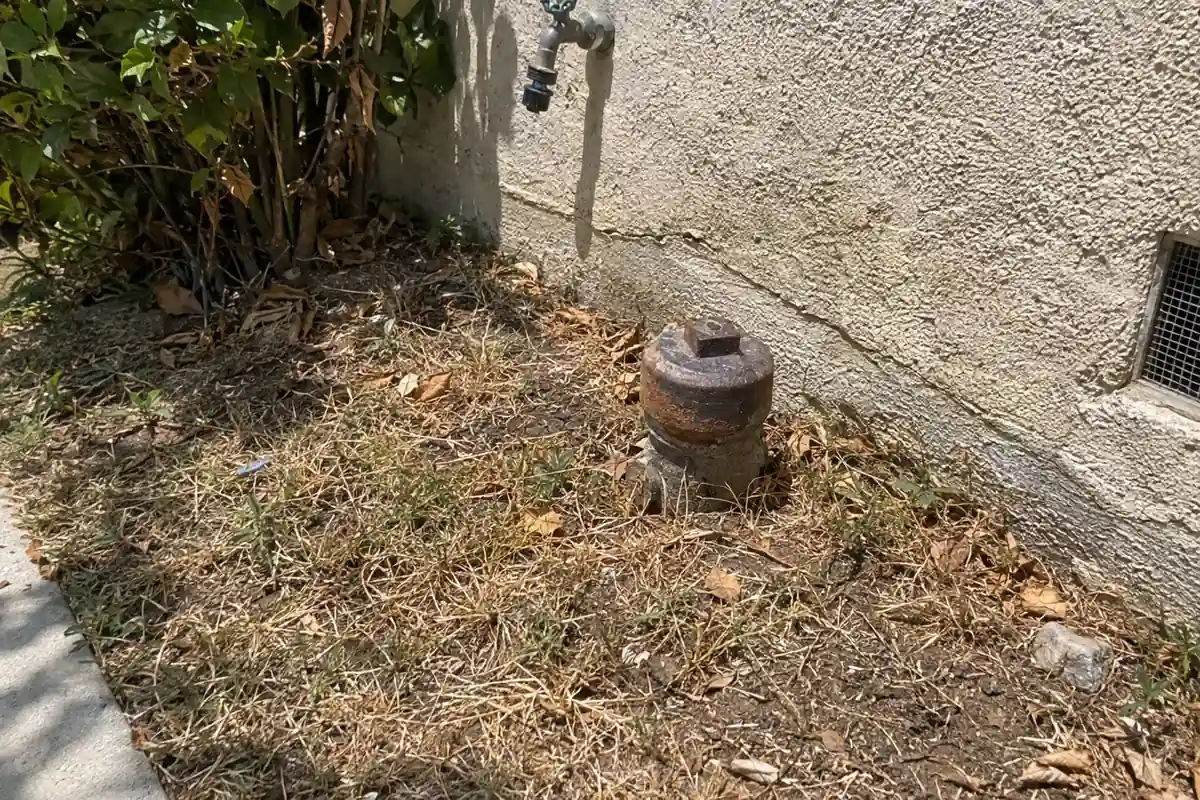
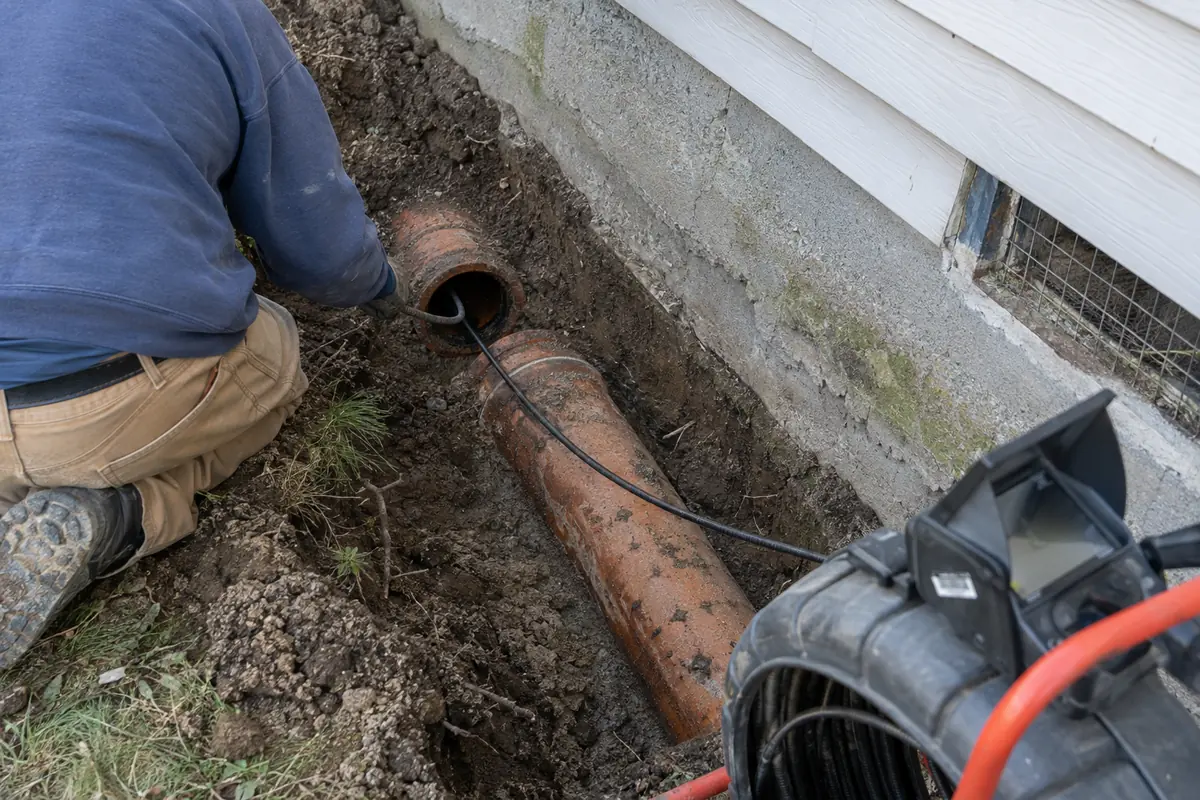
Old cast iron scales and cracks inside. A camera shows it before a new unit is tied to it.
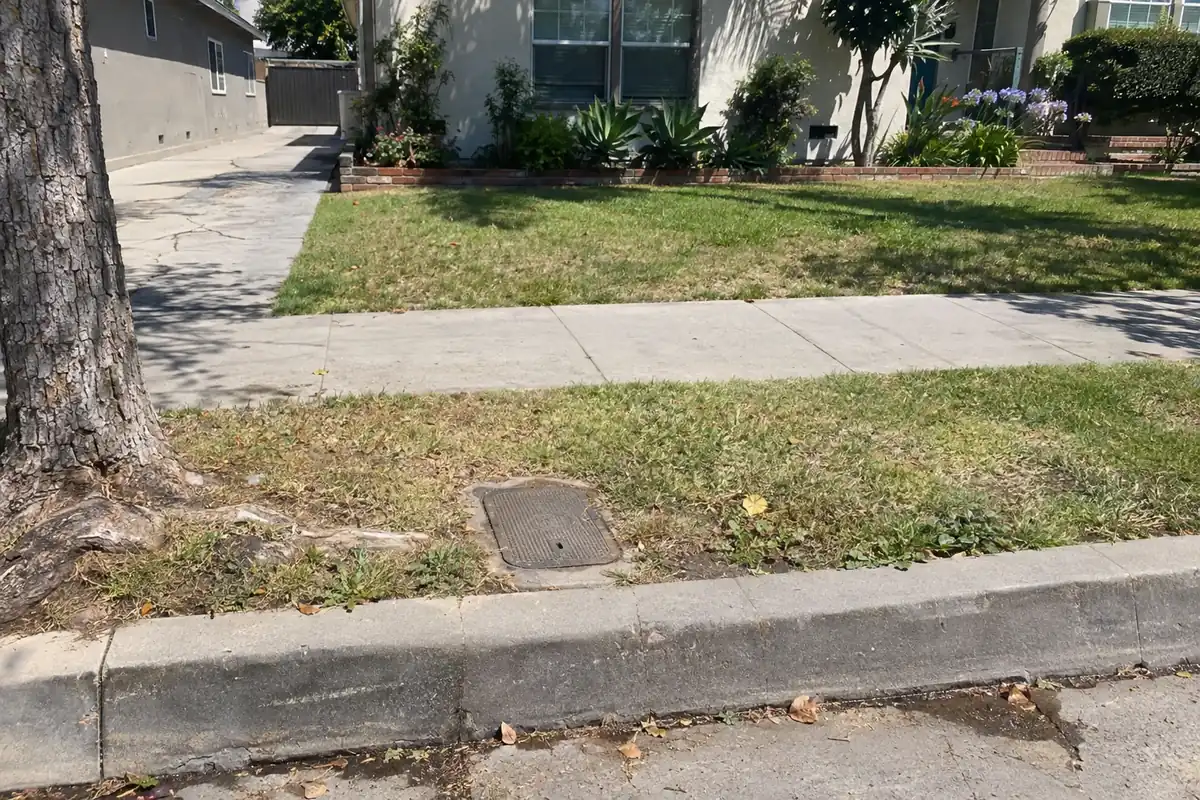
A long run from the meter to a rear unit adds trench length and may call for a larger line.
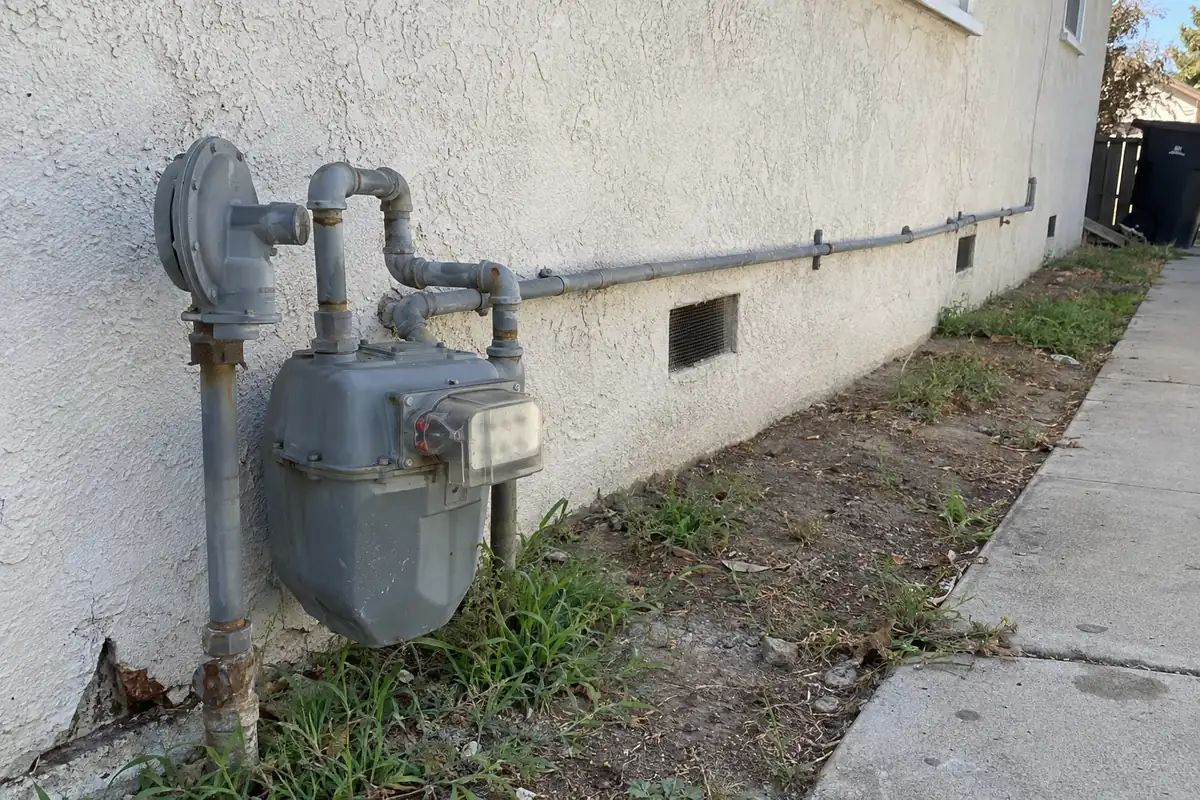
A gas line across the planned trench has to be rerouted by a plumber or crossed with room to spare.
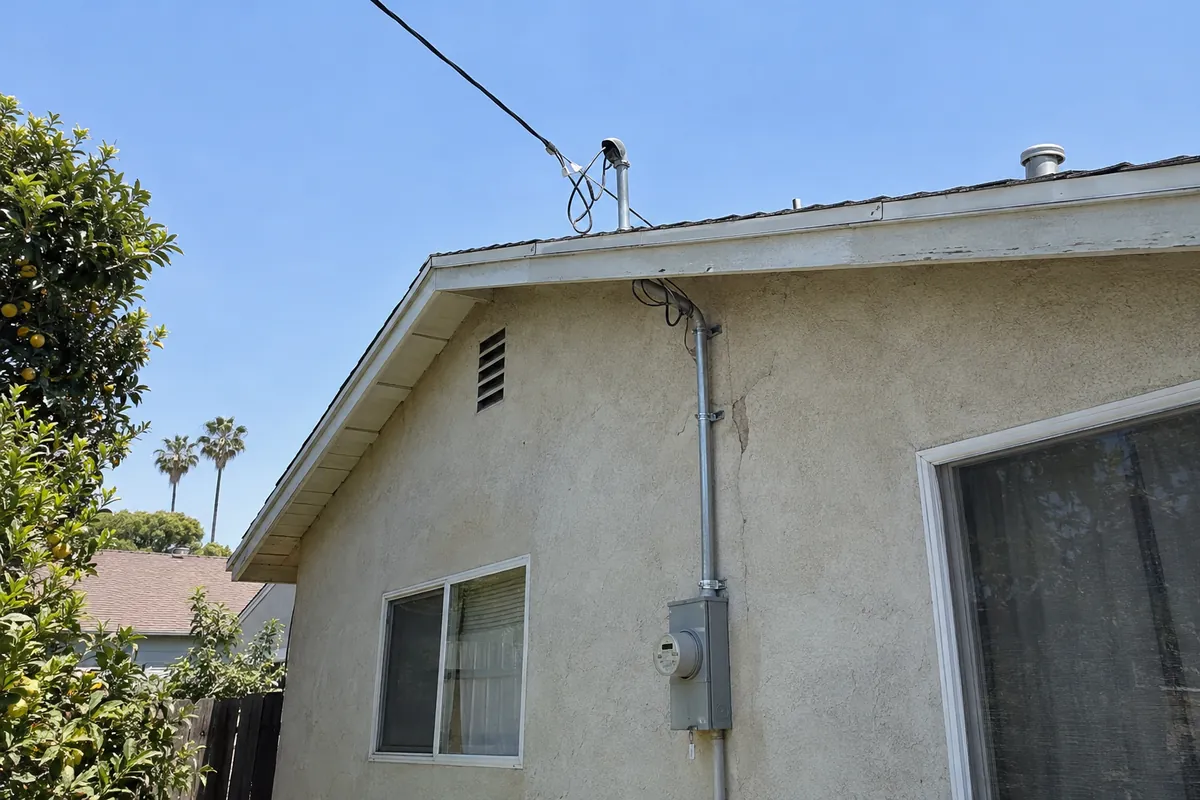
The drop from the pole decides where a new meter can mount and how the line reaches the unit.
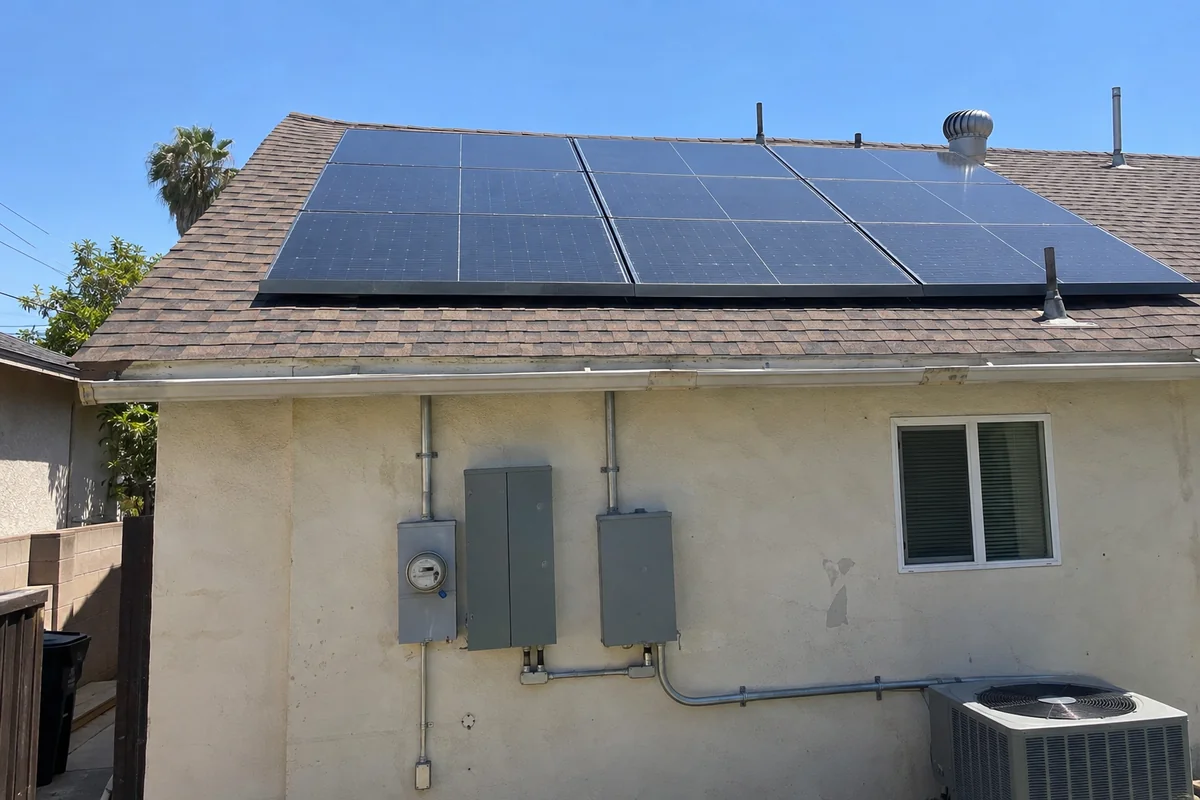
Panels on the main house tie in through the service equipment, so a panel change has to account for them.
The unit needs its own shutoff and its own protection either way, and the meter choice decides who holds the bill.
A parent, an adult child or a caregiver often stays on the main house's electric and water accounts. That keeps one bill and a smaller change at the street, but the main panel carries the whole load. In a converted building, LADBS asks for a separate electrical panel and a separate, accessible water shut-off valve for the ADU, so even a shared account gets its own panel.
Plan my backyard homeA tenant unit raises the question of who pays for what. A separate meter puts the account in the tenant's name. A shared meter leaves you collecting for usage, and the main panel still carries both homes. Rental owners get one relief on the water side: the unit is not treated as a new use for connection charges, which the trench section below explains.
Plan my backyard home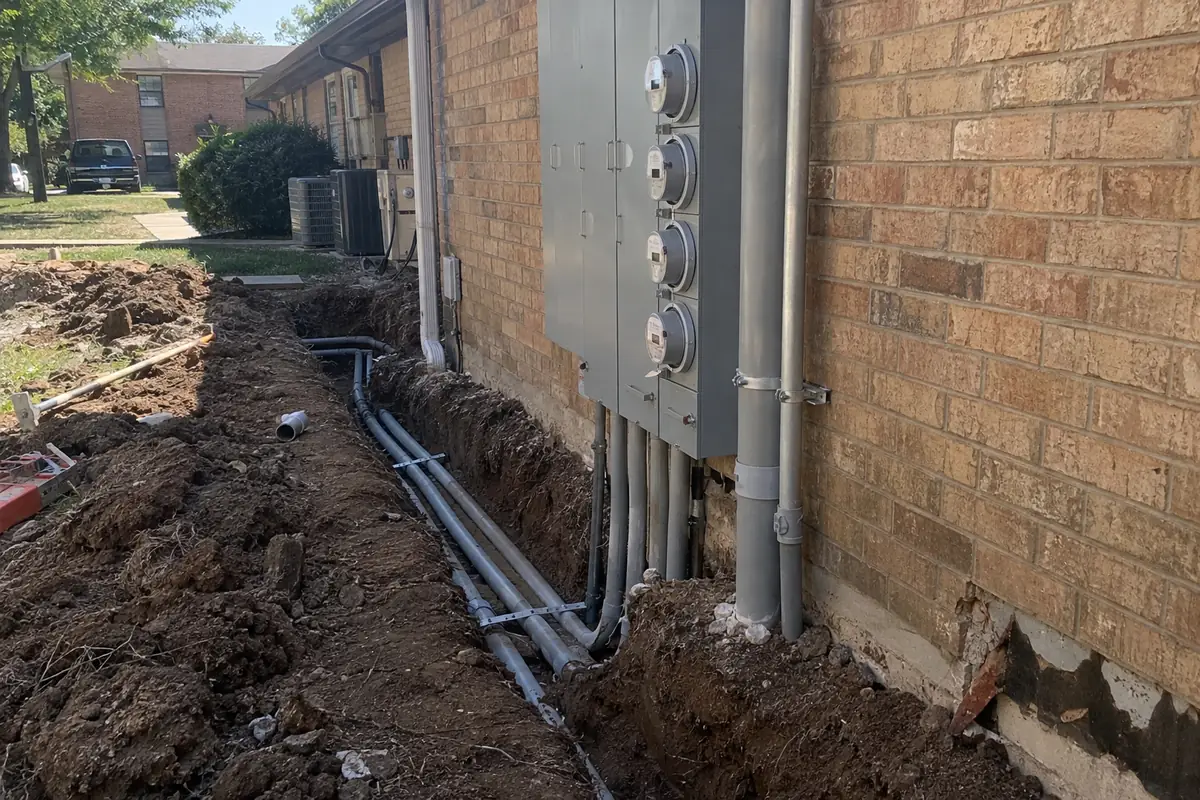
Utility work is sequenced so the answers come before the digging and the inspections come before the backfill.
Open the panel, read the label, find the cleanout and the water meter, and sketch the lot.
Run a camera down the sewer and add the new unit's loads against what the panel can carry.
Send the sewer and meter requests while the drawings are still open, so answers arrive before digging.
Dig, lay pipe at a steady slope, set cleanouts, tie in, and call for inspection before backfill.
The hard version is a rear unit on a long lot with a finished yard between it and everything it needs. Sewer, water and power each want a path, and the paths cross a patio, run under a tree and follow a neighbor's fence.
Sewer pipe has to run downhill at a steady slope. If the unit sits lower than the line it ties into, gravity stops helping, and the choice becomes a deeper trench or a sewage ejector pump. The pump avoids the deep cut and adds a machine to maintain, so both get priced.
An old line adds a question. A clay or cast iron sewer that looks fine from the cleanout can hold roots and a sag a few feet down. The camera answers that before the new unit adds its flow.
A shared meter means one account, one bill and a main panel that carries both homes. A separate meter means a new service, a trench for power and a tenant who holds the account. Family units often share, and rental units often split.
In the City of Los Angeles, LADWP offers a free meter spot visit before a new service panel goes in for a home or ADU, for panels up to 320 amps. A representative schedules the visit within 5 to 15 business days and leaves a sketch the LADBS inspector may ask to see.
LADWP approval comes up for a new unit only when the structure sits in or within 10 feet of a Public Utility Easement, according to LADBS guidance.
The pipe and the wire are the cheap part. Digging costs, and so does putting the yard back. Published Los Angeles-area figures put utility connections for one ADU at about $3,000 to $20,000, and the gap between the ends is distance, trenching, meter and panel upgrades, and where the sewer is.
The cheapest lever is where the unit sits. Moving it closer to the existing cleanout can shorten the trench more than any trick underground, so we sketch two positions and compare the runs before the plan is set.
That leaves one charge you can mostly set aside. For water and sewer connection and capacity charges, the HCD ADU Handbook, March 2026 does not count an ADU as a new residential use, unless the ADU goes up with a new single-family home. The pipe work is still yours to pay for, and only the capacity charge falls away.
Typical ADU situations around Los Angeles and the way each tends to unfold.
Example
The new unit is drawn, and now it has to plug into a house that was plumbed and wired decades ago. The panel has no open breaker spaces, or the line that carries the house's waste to the street is clay or cast iron of unknown condition. A rear unit can also sit below the street, with no downhill run for the waste.
First step is a camera down the existing sewer and a look at the panel label and what each breaker feeds. The camera shows roots, a sag or a broken joint. If the line is sound, the unit may tie in a couple of feet outside the house. Otherwise the choices are a repair, a separate line to the public sewer, or a pump.
Common scope is a cleanout at the tie-in, pipe laid at a steady downhill slope, a backwater valve where fixtures sit below the next manhole upstream, and a subpanel sized for the new kitchen, laundry and heating. Los Angeles County's ADU guidance lists these items and does not require a separate meter or panel.
Those are County documents. Check which building department covers your address, because the plan checker for that department decides what applies. A new or larger electric service starts with a request to the utility, and the panel itself is electrician work.
What to send: A photo of the panel with the door open, a photo of the breaker labels, a sketch of the lot showing the cleanout and the meter, and any camera video of the sewer.
Utility work raises practical questions about shutoffs, mess and who has to be home.
A planning range for utility connections on one ADU is $3,000 to $20,000, taken from published Los Angeles-area figures. These are not our prices, and the written price comes after a site visit.
| Job | Figure |
|---|---|
| Utility connections, one ADU Distance to the street, trenching, meter and panel upgrades, sewer location | $3,000 to $20,000 |
| Permit and plan check fees Government and school fees only; the city sets them | $5,000 to $20,000 |
| Garage conversion, whole project A panel upgrade is one of the things that moves this total | $100,000 to $220,000 |
| Hillside add-on, if the lot slopes An add-on to the base build, not a total; soils and access drive it | $30,000 to $90,000 |
Sometimes. A new unit adds a kitchen, laundry and heating or cooling, so the panel label and the breaker list get added up against those loads. If the panel has no room, a subpanel or a larger service is the usual fix, and an electrician sizes it. The meter spot visit with LADWP comes before a new panel goes in.
Either to the house's existing building sewer near the house, or on its own line to the public sewer. A camera and the fall to the street decide which. The Los Angeles Bureau of Engineering approves sewer capacity and availability for every ADU in the city, so that clearance goes in with the permit paperwork.
A sewage ejector pump can lift waste when a unit sits below the line it needs to reach. It can avoid a deep trench across a patio, and it adds a pump to maintain and to power. The camera and a level survey show whether gravity can work, and we price both ways.
Then the bad section gets repaired or replaced before the new unit connects to it. Los Angeles can ask for a Sewer Capacity Availability Request when discharge will rise significantly, and its permit manual checks that first. Whatever the camera finds goes into the written price as its own line.
We prepare and send the requests and follow the replies. Forms that need the owner's signature come to you. The utility depends on the address: LADWP for Los Angeles, Glendale Water & Power in Glendale, and Burbank Water and Power in Burbank, which publishes its own ADU requirements.
About us. Eagle Rock Backyard Homes plans backyard homes for owners in Los Angeles and Los Angeles County. Scope and price are agreed in writing before any work starts. More about us.
Call or email. We look at the panel, the meter and the sewer line before the price is written.